

Player & Dealer Both Get Blackjack: What’s the Result?
Ever found yourself at the blackjack table, only to see both you and the dealer turn over a perfect 21? It is an exciting moment that leaves many players wondering exactly what happens next.
Some imagine it is a win, others fear it is a loss, but the real outcome might surprise you. Whether you are a casual player or a regular, it helps to know how this situation is handled.
Stick around as we break down what takes place when both the player and dealer get blackjack. It is simpler than you might think, and understanding the rule can make your next game a lot less confusing.
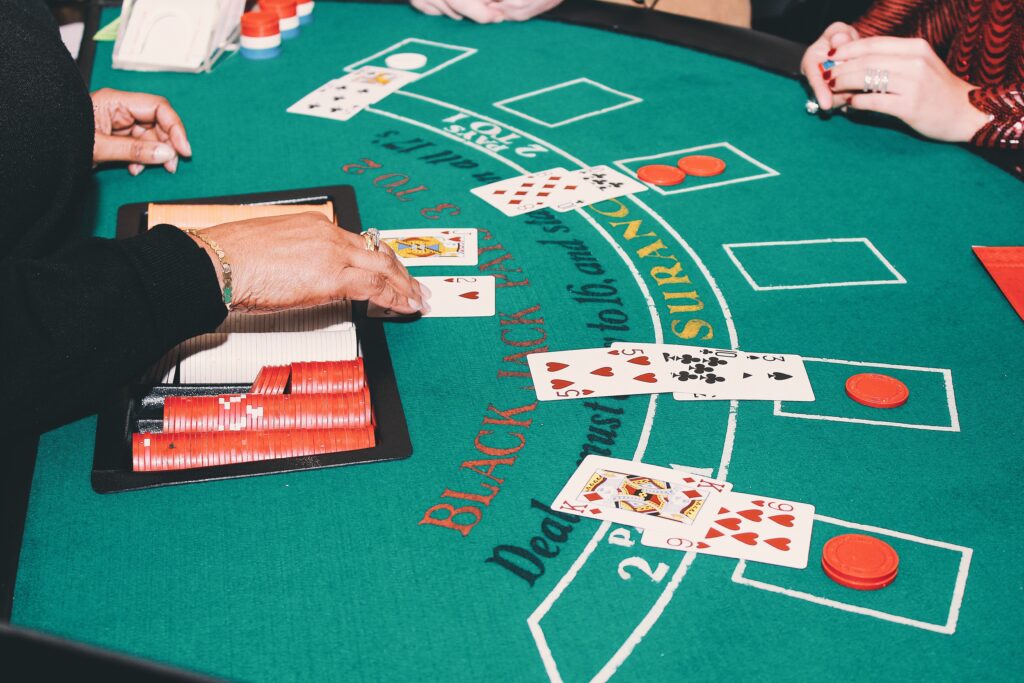
What Happens When Player And Dealer Both Get Blackjack?
If you and the dealer both receive blackjack in the same round, it is called a push. This is a tie, so neither side wins or loses, and no profit or loss is recorded on the main bet. Your stake is simply returned to your balance.
You will not receive the usual blackjack payout (for example, 3:2 or 6:5), and you do not forfeit your stake. The hand ends immediately and the wager is settled as a return, ready for the next deal.
In games where the dealer “peeks” for blackjack, a push on blackjacks is typically confirmed as soon as the dealer’s natural is revealed. In games without a peek, resolution occurs once all player actions are complete and the dealer turns over their hand.
Note that “blackjack” usually means a natural 21 made with two cards (an Ace and a ten-value card). A 21 made with more than two cards, or after splitting Aces, is typically not classed as a blackjack. In those cases, if the dealer has a natural blackjack, the dealer’s hand will usually win.
House rules can vary by table and provider. Some games may offer “even money” when you have a blackjack against a dealer Ace; taking even money pays 1:1 immediately and ends the hand, so there is no push. Always check the game rules and paytable before you play.
Side bets and insurance (if offered) are settled separately to the main hand. In a push on blackjacks your main stake is returned, but any optional wagers follow their own specific rules. If insurance has been taken and the dealer does have a blackjack, the insurance bet is resolved according to its payout terms, regardless of the push on the main hand.
Blackjack outcomes can differ after splits. A two‑card 21 made on a split hand is commonly treated as a regular 21, not a blackjack, and will not push against a dealer natural. Always confirm how splits, re‑splits, and aces are handled at your chosen table.
Gambling should be fun and not a way to make money. Set limits, only stake what you can afford to lose, and stop if it is no longer enjoyable. Eligibility, game availability, and rules are subject to the operator’s terms. 18+ only.
Dealer Push Rules And Payouts For Player Blackjack
Because a push has already been explained above, here is the key contrast: when only the player has blackjack (an Ace with a ten-value card as the initial two cards) and the dealer does not, the hand pays at the table’s blackjack rate, commonly 3:2. This “natural” applies only to the first two cards and not to totals of 21 made with three or more cards.
For example, a £10 bet returns £15 in winnings, plus your original £10, for a total return of £25. At £20 stake, the 3:2 win would add £30, returning £50 in total. Chips returned always include your original wager unless the result is otherwise specified by house rules.
Not all tables pay 3:2. Some games pay 6:5 or even 1:1 on a natural blackjack, which materially changes the return and increases the house edge. Rules can also differ on whether blackjacks after splits are eligible for any premium payout; in many games, only a natural from the first two cards qualifies, and split Aces may receive only one additional card each.
Always review the paytable and any game-specific rules shown on the felt or in the game information before you play. Limits, side bet rules, and eligibility for special payouts may vary by venue or software provider.
If the round is a push, there is no 3:2 or even-money payout. You simply get your stake back and the hand ends in a tie. A push can occur when both hands have the same total, including when both player and dealer hold a natural blackjack.
Any separate side bets you may have placed are usually settled independently according to their own rules. A push on the main hand does not guarantee a side bet win, and side bets may resolve win, lose, or push regardless of the main outcome. Split and double-down hands are also resolved according to their own results.
When the dealer shows an Ace, you may be offered insurance. Insurance is an optional, separate wager (typically up to half your main bet) that pays 2:1 if the dealer’s hole card makes a blackjack; if not, the insurance bet loses and normal play continues.
If you hold a blackjack, some tables offer “even money”, which is effectively the same as taking insurance on your hand and guarantees a 1:1 payout regardless of the dealer’s hole card. Taking even money ends the hand immediately for a guaranteed return but forgoes the higher 3:2 payout if the dealer does not have blackjack.
This is optional and treated as a separate decision; outcomes and suitability vary by player, table rules, and personal preferences. No option removes the inherent house edge. Set limits, only stake what you can afford to lose, and stop if the game is no longer enjoyable.
With that in mind, another common question comes up when the dealer shows an Ace: whether to take insurance or even money. There is no universal answer—review the paytable, understand the rules in use, and make an informed choice that fits your approach and budget.
Does Insurance Pay If Both Player And Dealer Have Blackjack?
If you take insurance and both you and the dealer end up with blackjack, your main bet is a push (a tie) and is returned to you without profit or loss. The insurance bet is a separate, optional side wager that is settled independently and pays out if, and only if, the dealer has blackjack, regardless of your own hand.
In that scenario, the insurance wager pays 2:1 on the insurance stake. You recover your original stake from the main hand because it pushes, and your insurance wins because the dealer’s hand is a natural blackjack. By contrast, if you have blackjack but the dealer does not, your insurance bet loses even though your main hand wins in the usual way.
For clarity, consider a simple example: you stake £20 on the main hand and £10 on insurance. If both hands are blackjack, your £20 main bet is returned to you, and your £10 insurance pays £20 (2:1), for a net profit of £20. If you have blackjack and the dealer does not, your insurance £10 is lost, while your main hand pays as per the table rules (commonly 3:2 or 6:5, where applicable).
Insurance is typically offered only when the dealer’s face-up card is an Ace, and the decision must be made immediately, before the dealer checks for blackjack. It usually costs half of your original stake and does not affect how your main hand is played or settled beyond the insurance outcome.
Procedures differ by game type. In many “peek” games the dealer checks for blackjack right away; in some European no‑hole‑card games, the dealer does not take a second card until after players act, but insurance is still paid only if the dealer’s final hand is a natural blackjack. Some tables also offer “even money” when you hold a blackjack against a dealer Ace; this is essentially the same as insuring your own blackjack and results in an immediate 1:1 payout on your main stake.
Rules, procedures, and payout structures can vary by casino and game variant. Always read the table rules and signage before placing side bets. Insurance is optional and not required to play; it does not guarantee a profit and, over time, generally carries a higher house edge than the main game.
Gambling outcomes depend on chance. Keep play affordable and within your limits, take breaks, and use tools such as deposit or time limits where available. If you feel your play is becoming a concern, consider support options. You must be over the legal age to gamble in your jurisdiction.
Side wagers can be useful to understand, but split hands raise a different set of questions; always check how splits, re‑splits, and other options interact with the dealer’s Ace and any insurance or even‑money offers.
Split Hands And Aces Treated As Blackjack
Splitting pairs, especially aces, is a common move in blackjack and can be the correct decision in certain situations. It creates an additional hand and a second stake, which increases your exposure as well as your potential return.
However, a 21 made after a split is not usually treated as a natural blackjack, because a natural is specifically a two‑card 21 from your original hand. This distinction is standard in most casino rules and should be checked on the table placard before you play.
For example, if you split aces and then draw a ten‑value card, you have 21, not blackjack. This matters for payouts. A natural blackjack typically pays more than a standard winning hand (commonly 3:2, though some tables pay 6:5). By contrast, a 21 achieved after splitting almost always pays even money (1:1) and is settled as a regular win.
These payout differences are normal and should be set out in the table rules. If a venue offers an alternative treatment, it will usually be clearly advertised at the table; assume even‑money settlement on split 21s unless the rules say otherwise.
Many tables also allow only one card to each split ace, with no further hits, so you usually cannot draw again if you catch a small card. This is a common restriction and can make split aces less flexible than other splits.
Some venues may permit re‑splitting aces, but others do not, and doubling after a split ace is commonly restricted. Other options such as surrender can also be affected by a prior split. Always confirm what is allowed before you act, as house rules vary between casinos and game variants.
If the dealer also finishes on 21, your split hand ties as a regular 21, not as blackjack, so normal push rules apply. A tie on 21 after splitting does not receive a blackjack payout and will simply return your stake for that hand, unless the specific table rules state otherwise.
How and when the dealer checks for blackjack can also affect outcomes and the speed of settlement. In “peek” or hole‑card games, the dealer checks for a natural immediately, which can prevent you placing extra chips on splits or doubles if the round is already over.
In “no‑hole‑card” or European‑style games, the dealer does not check until after players act. This means additional wagers placed on splits or doubles may be at risk and can be lost if the dealer later reveals a blackjack, even though you have already committed those extra chips.
Side rules such as insurance are separate from split‑hand treatment and may not be available in every variant. If insurance is offered, its availability and settlement are governed by the posted rules and can differ by table.
As with any casino game, outcomes are based on chance and the published rules, and there is no strategy that guarantees a profit. If you are unsure, read the table notes or ask the dealer for clarification before you split. Only stake what you can afford to lose and consider setting limits to help manage your play.
Next up, here is why the way the dealer checks their cards can change how quickly a round is settled, and how that timing can affect any extra chips committed to splits or doubles.
How Do Dealers Check For Blackjack And Why Does It Matter?
Dealers follow a set process to check for blackjack when their face-up card suggests it could be possible. This typically occurs when the upcard is an ace or a ten-value card (10, J, Q, or K). In “hole-card” games, the dealer takes a quick peek at their facedown card using a mirror or sensor to confirm immediately whether they hold a natural 21.
This confirmation happens before players take further actions, so the hand can be settled at once if a blackjack is present. The aim is to prevent unnecessary play against a hand that cannot be beaten and to keep the round moving in a transparent way.
In “no hole card” games, often called European style, the dealer does not draw or reveal a second card until all players have completed their actions. The result is therefore only confirmed at the end of the round, after any hits, stands, doubles, or splits have been taken.
Both approaches are standard and depend on the table rules posted by the venue. It is sensible to review these rules before you play, as the procedure can affect how hands are settled and what happens to any additional wagers you choose to place during the round.
Check the layout and any house notices for details such as whether the dealer peeks with an ace or ten, how side bets are treated when a dealer blackjack occurs, and whether specific options like surrender are offered at that table. If you are unsure, ask the dealer for clarification before placing a bet.
Why does this matter? If the dealer has blackjack in a peek game, the hand is decided at once under the house procedure. In many rulesets, player blackjacks will push against a dealer blackjack, other resolved hands will lose immediately, and any insurance wager (where offered) is settled according to the displayed payout.
Some venues may also offer “even money” when you have a blackjack against a dealer ace; this is simply a form of insurance and, if taken, is paid as stated on the table. Participation in any optional side bet is entirely your choice and may not be available on all tables.
In games without an early peek, players may still complete their hands and place additional bets, such as doubles or splits, before the dealer’s blackjack is confirmed. Depending on the specific house rules, those extra wagers may still be at risk if the dealer later reveals a natural 21.
Other venues may return certain additional wagers or treat them differently when a dealer blackjack is revealed at the end. Always check the table signage or ask the dealer to understand exactly how this is handled at your table before you act.
Blackjack outcomes are uncertain and depend on chance as well as the rules in use. Play only if it remains enjoyable, set limits that suit your circumstances, and never risk more than you can afford to lose.
Do not chase losses, and take breaks if you feel under pressure. If gambling is affecting you or someone close to you, consider seeking support from recognised help services in your area.
Common Misunderstandings About Mutual Blackjacks
It is easy to assume matching blackjacks must mean a win. In reality, it is a straightforward push and your stake is simply returned, with no profit or loss on the main wager.
A push means the round ends for that bet and your chips are given back without any adjustment. Any side bets you may have placed are settled under their own rules and are not affected by the push on the main hand.
Even if your table advertises a payout for a player blackjack (such as 3:2 or 6:5), that payout only applies when the dealer does not also have blackjack. When both hands are natural blackjacks, there is no special bonus for matching the dealer, and no extra fee is taken.
Some tables offer “even money” when you hold a natural blackjack against a dealer Ace. This is simply a form of insurance settlement and not an extra reward; the outcome on the main hand against a dealer blackjack remains a push.
Another mix-up is thinking insurance changes the result of your main bet. It does not. Insurance is an optional, separate wager (usually up to half your original stake) that only pays if the dealer has blackjack.
Insurance is typically offered only when the dealer’s upcard is an Ace, is taken before any further action, and is settled independently. You can decline it, and doing so does not affect the treatment of your main hand.
If the dealer does have blackjack, the insurance bet typically pays 2:1, but this does not turn a push into a win on your main hand. In most situations, taking insurance does not improve the expected return for the main bet, and the odds generally favour the house.
Where “even money” is available, it is mathematically equivalent to taking insurance on your own blackjack. Choosing it or declining it is a personal decision; make sure you understand the implication before committing funds.
Finally, while tables can have small rule variations, the outcome for player-and-dealer blackjack is almost always the same: it is a tie, your original bet comes back, and the next hand begins.
House rules and posted procedures govern how ties are declared and when chips are returned. If anything is unclear, ask the dealer to confirm how the table settles these situations before you place a bet.
In some rule sets (for example, no-hole-card/European rules), the dealer may not check for blackjack until after player actions. This can affect how additional bets from splits or doubles are handled, but when both hands are natural blackjacks, the main bet still resolves as a push.
Always check the table rules and paytable so you know exactly how your game is settled. Set limits, play within your means, and never chase losses; blackjack outcomes are uncertain and the house retains an edge.
**The information provided in this blog is intended for educational purposes and should not be construed as betting advice or a guarantee of success. Always gamble responsibly.