

How Many Times Can You Hit in Blackjack? Dealer’s Role
Understanding how many times a player might hit in blackjack matters for anyone learning the game. Asking for another card shapes the flow of a round, and the rules for players and dealers are not identical.
Many new players wonder how often they might take an extra card, and whether the dealer follows the same process. The answers lie in some simple rules that can help guide the pace of each hand.
This blog post explains the basic ideas behind hitting in blackjack, the choices a player may make, and the specific pattern a dealer follows. It also touches on why these differences exist and how they influence play.
Introduction To Hitting Rules In Blackjack
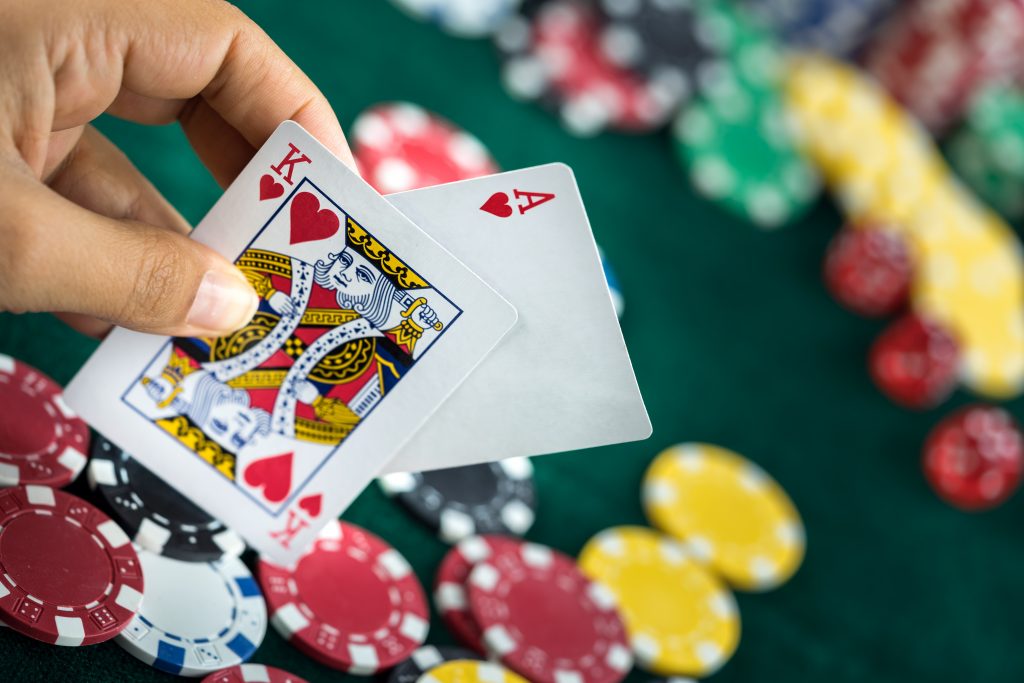
Hitting is the move where a player asks for another card in an attempt to reach 21. It’s optional for the player unless the total goes over 21.
A hand may continue to grow card by card. If the total goes beyond 21, that hand ends immediately.
The dealer’s process is not optional—it follows a set pattern that never changes from hand to hand.
These basics lay the groundwork for understanding how many times a player or dealer might hit during a round.
How Many Times Can You Hit In Blackjack?
A player may ask for extra cards repeatedly, as long as the total does not go over 21. There isn’t a strict limit to the number of hits in a single hand.
Some hands might reach a strong total after one or two hits, while others may need an additional card or two, but hitting many times in a single hand is uncommon, as the chance of busting increases with each card. If the total passes 21 at any point, that hand ends.
The decision to continue is up to the player, though the dealer’s actions follow a different approach.
Dealer Hitting Rules Explained
Unlike players, the dealer cannot choose freely. Their actions follow a strict, pre-set pattern.
Typically, the dealer must take another card if their total is 16 or lower, and stop when it reaches 17 or more.
One variation involves “soft 17”—a total of 17 that includes an Ace counted as 11, such as Ace plus 6. Some tables require the dealer to take another card on soft 17, while others have them stop. Table displays or posted rules usually indicate which version is being used.
These rules apply regardless of what the player holds.
How Many Times Can The Dealer Hit In Blackjack?
There is no strict limit on the number of hits for the dealer, but in practice, most hands are resolved within a few cards. The dealer continues hitting until their total reaches the table’s required stand total or they bust.
Because of the soft 17 variation mentioned earlier, the number of dealer hits in a hand may differ. The exact sequence depends on the cards drawn and the table’s policy on soft totals.
When Does The Dealer Have To Stand?
The dealer keeps taking cards while the total is 16 or lower. Once the total reaches 17, the usual rule is to stop.
If a table requires the dealer to hit on a soft 17, they will take another card whenever their total is a soft 17, and then continue hitting until their total reaches 17 or more according to the table rules.
Once the dealer stops, the remaining hands are compared to theirs to determine the outcome of the round. This predictable sequence makes it useful to check the table’s 17 policy before starting.
Impact Of Hitting On Your Hand Total
Each additional card changes the total value of the hand and can turn a soft hand into a hard hand or increase the total while still remaining soft if an Ace can adjust. Number cards are worth their face value, picture cards count as 10, and Aces may count as 1 or 11.
When an Ace counts as 11 and the total remains below 21, the hand is “soft” (for example, Ace plus 6). If the Ace must count as 1 to avoid going over, the hand is “hard”.
Soft hands are flexible because the Ace can count as 1 or 11. For example, Ace plus 6 is soft 17; if the next card is a 10, the Ace counts as 1 and the total becomes 17. If the next card is small, like 2 or 3, the total increases but remains under 21, keeping the hand valid. Hard hands lack this flexibility, so each extra card has a greater consequence.
The dealer’s total also increases with each card, but only according to their fixed pattern. This predictable behaviour allows players to focus on their own hand.
If you choose to play, set personal limits that suit your circumstances and take breaks to maintain perspective. Free, confidential support is available from organisations such as GamCare and GambleAware if needed.
Play Blackjack Online at Rose Casino
At Rose Casino, we offer a variety of online table games, including blackjack, roulette and baccarat. Our live dealer tables provide a studio-style experience, while our Random Number Generator (RNG) games follow the same rules with computer-dealt hands, allowing you to play at your own pace.
We are licensed and regulated by the UK Gambling Commission (UKGC) and provide features such as deposit limits, time reminders and the option to take a break. These tools are available to help you manage how you play.
If you’re interested in playing blackjack online or seeing what other casino games we offer, feel free to make an account at Rose Casino, deposit some funds to play with and explore the range of games we have available in a secure environment.
**The information provided in this blog is intended for educational purposes and should not be construed as betting advice or a guarantee of success. Always gamble responsibly.