

Can You Bet On Every Number In Roulette? Whole Table Explained
Ever wondered what would happen if you placed a chip on every single number in roulette? Maybe you’ve seen it in films or thought about trying it at an online table.
Roulette’s spinning wheel and wide range of bets can look full of possibilities. But is there a way to guarantee a win by covering all the numbers, and what would that mean for your money?
This guide unpacks exactly what happens if you try to bet on every number, how the table really works, and a few facts that tend to surprise people.
Can You Cover Every Number On A Roulette Table?
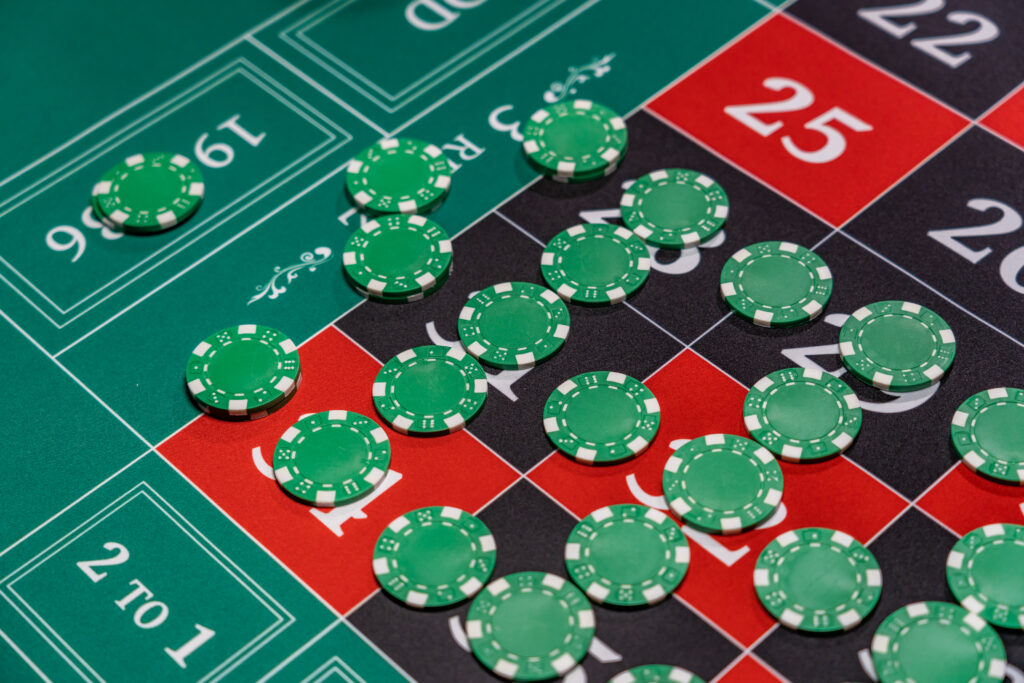
Yes, you can place a bet on every single number on a roulette table. This is often called covering the board or full table coverage, and it simply means placing at least one chip on each individual number. Some players also combine straight-up bets with other layouts, but “covering every number” typically refers to a chip on each number.
It doesn’t matter if you’re playing European roulette with 37 numbers or American roulette with 38. There is nothing stopping you from putting a chip on every spot, provided the table limits and chip denominations allow it. Be aware that the required total can be high if there is a minimum stake per number, and you must remain within the posted maximums per bet and per table.
Some players try this thinking a win is guaranteed because one of their numbers must land. While one number will always hit, the key point is what happens to your total outlay versus the payout on the single winning number. A straight-up win pays 35:1 plus your stake back, so on a European wheel staking one unit on all 37 numbers returns 36 units on a hit (a net loss of 1). On an American wheel staking one unit on all 38 numbers returns 36 units (a net loss of 2). Covering every number does not beat the house; it just changes how each spin feels.
Roulette outcomes are random and independent, and no staking pattern can remove the built-in house edge. Only stake what you can afford to lose, set limits, and avoid chasing losses. Gambling should be fun and is for adults only (18+ in the UK).
So if it is possible, what does it cost?
How Much Does It Cost To Bet On Every Number?
If you want to cover every number, you need one chip for each spot on the table. A European wheel has 37 numbers (1–36 plus zero). An American wheel has 38 (adding double zero). Each of these is an individual straight-up bet, so you will place a separate chip on every number you intend to cover.
Using a £1 minimum chip, covering every number would cost £37 per spin on European roulette and £38 per spin on American roulette. If the table minimum or your chip value is higher, the cost per round rises in step.
Table rules can vary. Some venues set a minimum per inside bet (each straight-up), while others apply a total-table minimum. Always check the limits and bet requirements on the specific table before you begin to ensure your staking is permitted.
That figure is for a single spin. Repeating the same approach quickly multiplies your spend, so it helps to set a clear budget and stick to it. Think about how many spins you plan to play and size your stake so your session remains affordable.
Covering every number does not remove the house edge. Straight-up bets pay 35:1. If you stake £1 on all 37 numbers on a European wheel, a winning spin returns £36 (£35 winnings plus your £1 stake on the winning number), but you have staked £37 in total, leaving a £1 net loss on that spin. On an American wheel, staking £1 on all 38 numbers returns £36 against £38 staked, a £2 net loss. Outcomes are random and you cannot guarantee a profit.
Only gamble with money you can afford to lose. If play stops being fun or you feel your spending is getting out of control, take a break and seek support. Never chase losses.
Payouts When You Bet On Every Number
If you bet on every number, a chip will be on the winning pocket each spin, so you will receive a payout every time on that pocket. This does not mean you make a profit each spin; the overall result still reflects the house edge.
A straight-up bet on a single number pays 35 to 1. For a £1 stake, that is £35 in winnings plus the £1 chip returned on the winning number, giving £36 back in total for that one pocket.
However, because you also staked every other number, all those other chips lose. On a European table with 37 numbers, you would lose 36 chips and win on one. Spend £37 to cover the board, receive £36 back on the winner (£35 plus the returned £1), and you are down £1 for that spin.
On an American table the loss is £2 per spin, because you spent £38 and still only receive £36 back on the winning number. This reflects the built-in house edge: roughly 2.70% on European roulette and about 5.26% on American roulette when betting single numbers.
Covering every number can reduce variance because you see a return on every spin, but it does not change the expected loss over time. The payouts are fixed and the zero (and double zero in American roulette) ensure the game remains negative expectation overall.
Table minimums, chip denominations, and maximums may also limit your ability to place full coverage in practice. Always stake only what you can afford to lose, set limits, and avoid chasing losses. The explanation here is for information only and is not a strategy to beat the game.
If you are still curious how to place those chips, here is what full coverage looks like on the felt, but remember that even with a payout every spin, the net outcome remains a small, steady loss on average.
How To Place Chips To Cover The Whole Table
Covering the whole roulette table means placing straight‑up bets on every individual number on the layout, including the zero (and double zero where applicable). A straight‑up bet is placed in the centre of a single number’s square.
The exact layout depends on the version in play, but the principle is the same: one chip per number so that every outcome on the wheel has a corresponding bet.
There are no special patterns involved. Using different coloured chips can help you keep track of your wagers in a busy game, and the dealer can provide a dedicated colour if needed so your bets are clearly identified.
Minimum Chip Layout To Cover All Numbers
To cover every number, you will need the same number of chips as there are numbers on the wheel:
European roulette: 37 chips (numbers 1–36 and a single zero)
American roulette: 38 chips (numbers 1–36, zero, and double zero)
If the table minimum is £1 per straight‑up bet, that equates to £37 or £38 staked per spin, depending on the version. Table limits may also apply to the maximum you can place on a single number, so always check the table rules before you start.
Backing every number does not secure a profit. Straight‑up bets pay 35:1, so on European roulette a winning number returns 36 units in total while you have 37 at risk, resulting in a net loss of 1 unit per spin. On American roulette, the total return is 36 units against 38 staked, a net loss of 2 units per spin. This approach does not change the house edge.
Roulette outcomes are random, and no staking method can guarantee returns. Only gamble what you can afford to lose, set limits, and stop if it is no longer enjoyable.
What Are Table Limits And Rules That Affect Covering All Numbers?
Before attempting full coverage, it helps to understand the table limits and house rules. Even if you place chips on every outcome you can, the house edge remains and there is no way to guarantee a profit on any spin.
Every roulette table sets both minimum and maximum bet limits. The minimum is the least you can stake on a single bet, while the maximum caps how much can be placed on a single number or, at some venues, across certain bet types.
Limits can apply per position and in aggregate. For example, a straight-up (single number) may have a lower maximum than an outside bet, and there may also be a table maximum that applies to the sum of all your chips on the layout.
Some tables also have a maximum payout for a single spin. If a potential win exceeds that cap, the full amount will not be paid. In some cases, the stake may be reduced or the payout limited so the result stays within the published limits.
Online tables may add extra rules about bet placement, including limits that make it impractical to cover the entire board. You may encounter timers, restrictions on certain call or neighbour bets, or caps on the number of chips per spin.
Game information pages usually display limits, return-to-player (RTP), and any special conditions. Features and limits can vary by variant (for example, single-zero versus double-zero), so checking the rules on the table you are using avoids surprises.
With the practicalities in place, it helps to look at why the numbers work out the way they do. The zero(s) create the house edge, so examples should be viewed as illustrations of risk, not a strategy or advice to bet. Always stake within your means and never chase losses.
How Does The House Edge Change Between European And American Wheels?
The house edge is the built‑in statistical advantage the casino has over the long term. It arises from the rules and payouts of the game, and it varies by roulette version.
European roulette has 37 numbers with a single zero. That single zero creates a house edge of about 2.70% (an RTP of roughly 97.30%). These figures are theoretical averages calculated over a very large number of spins; actual results in any session will vary.
Put simply, for every £100 wagered over time, the operator would expect to retain around £2.70 on average. Outcomes remain random and unpredictable on each spin, and past results do not influence future ones.
American roulette has 38 numbers, adding a double zero. That additional pocket lifts the edge to roughly 5.26% (about 94.74% RTP), which equates to an average of around £5.26 per £100 wagered over the long run, again on a theoretical basis.
Note that certain American-wheel wagers, such as the five-number bet (0–00–1–2–3), carry an even higher edge of around 7.89%, making them less favourable than other options on that layout.
Because the house edge is smaller on a European wheel, it is generally the more favourable choice when rules are otherwise identical. Some tables also apply la partage or en prison to even‑money bets, which can further reduce the effective edge; always check the specific table rules before playing.
No staking system or approach, including full coverage, can remove the house edge or guarantee profit. Set limits, play for entertainment, and only wager what you can afford to lose.
Does Betting Every Number Change Your Expected Return?
Betting on every number does not change roulette’s expected return. No matter how stakes are arranged, the house edge remains the same, because it is built into the wheel via the zero(s). On a single‑zero European wheel this edge is about 2.7%, and on a double‑zero American wheel it is higher.
When the board is fully covered, you receive a payout each spin, but the total returned is still less than the amount you put down once the losing chips are counted. The feeling of frequent small wins can mask the fact that the maths is unchanged. You may reduce volatility by spreading bets, but you do not improve the underlying return.
So while it can seem reassuring to know a chip will hit the winning pocket every time, the outcome over time remains a steady loss that reflects the game’s edge. Short‑term results can vary, but in the long run the return converges towards the house advantage, and no staking pattern removes it.
Always play responsibly: set limits, take breaks, and only gamble with money you can afford to lose. Roulette is a game of chance, and there are no risk‑free strategies or guaranteed profits.
Does Betting Every Number Guarantee A Win?
Placing a bet on every number means a chip will always be on the winning pocket each spin, so a recorded “win” occurs every time. However, outcomes are random and independent, and this approach does not change the underlying odds or the house edge.
The catch is that the single-number payout does not cover the cost of all the losing chips across the rest of the layout. For example, a straight-up bet typically pays 35:1. If you stake one unit on every number on a single-zero wheel, you risk 37 units and receive 36 back when your number hits, leaving a small shortfall. On wheels with more pockets, the deficit is larger.
Because of this payout structure, the game is designed to produce a small expected loss per spin, not an overall gain. You may see frequent “wins” on the results board, but your total balance is likely to decrease over time.
No staking pattern or spread of numbers can remove the house edge, and past results do not influence future spins. Each spin is independent, and there is no strategy that can guarantee a positive return.
In short, covering every number guarantees a result on the board, but not a profit. If you choose to play, set a clear budget, avoid chasing losses, and only gamble with money you can afford to lose.
**The information provided in this blog is intended for educational purposes and should not be construed as betting advice or a guarantee of success. Always gamble responsibly.