

Can AI Predict Roulette? Machine Learning & Roulette Bots Explained
The world of artificial intelligence is moving fast, and many are wondering if clever algorithms can crack the code of classic casino games like roulette. You may have seen stories about high-tech roulette bots or read claims that machine learning can predict where the ball will land.
In this post, we’ll take a closer look at how AI, machine learning, and computer programmes are being used to try and outsmart the roulette wheel. Are these tools really able to beat the odds, or are they just another casino myth?
Stick around as we explore the truth behind roulette bots, the science behind prediction, and what every player should know before trusting technology with their decisions.
How Does Roulette Work?
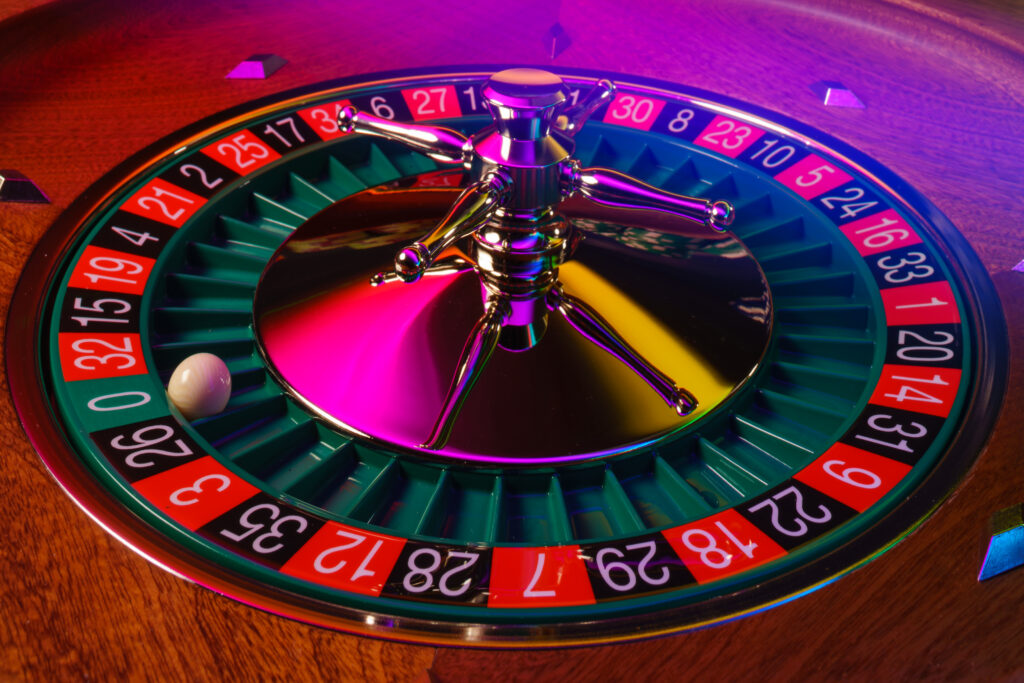
Roulette is a classic casino game found in most gambling venues, both online and in person. It features a spinning wheel with numbered pockets, usually 0 to 36 on European wheels, and a small ball that is released onto the rim of the wheel.
Before each spin, players place chips on the table layout to predict where the ball will land. You can bet on a single number, a group of numbers, colours such as red or black, or whether the result will be odd or even.
Bets are commonly described as inside (straight up, split, street, corner, line) and outside (red/black, odd/even, high/low, dozens, columns). Each option has different odds of winning and corresponding payouts.
In physical casinos, chip colours help identify each player’s bets, and the dealer will announce “no more bets” before the ball drops. Online, the interface shows available wagers and clearly indicates when betting is closed. Always check the table’s minimum and maximum stakes.
When betting closes, the dealer spins the wheel and releases the ball. After a few moments, the ball settles into one of the numbered slots. In online games, outcomes are determined by a certified random number generator; in live dealer games, a real wheel produces the result. In all cases, results are based on chance.
If your bet matches the outcome, you receive a payout according to the game’s paytable. For example, a single-number “straight up” bet typically pays 35:1, while even-money bets such as red/black pay 1:1. These payouts are fixed by the rules of the game.
Roulette outcomes are random within the design of the game. The house edge comes from the presence of the 0, and sometimes 00, which means the payout odds are slightly lower than the true odds of winning. European roulette with one zero typically has a house edge of around 2.70 percent, while American double-zero wheels are around 5.26 percent.
Some tables offer French rules such as la partage or en prison on even-money bets, which can reduce the effective house edge when the ball lands on zero. House edge and return to player (RTP) are long-term statistical averages and do not predict individual session results.
No betting system can overcome the house edge. Play responsibly by setting limits, taking breaks, and never wagering more than you can afford to lose. Gambling is for adults only and should be treated as a form of entertainment.
Can AI Predict Roulette Outcomes?
Roulette is structured so that each spin is independent, with no information from previous results carrying over to the next. In a properly run game, there is nothing to forecast in advance, and previous reds, blacks, highs, or lows do not change the probabilities on the next spin.
The game also has a built‑in house edge that does not vary based on past outcomes or betting patterns. No staking plan or strategy can alter the underlying maths, it can only change how quickly you experience wins and losses.
Even with advanced technology, AI and machine learning cannot predict the outcome of a fairly operated roulette game. Licensed operators use strict procedures, regular maintenance, and independent testing to ensure results cannot be influenced or foreseen.
For online roulette, certified random number generators are used to produce outcomes that are both unpredictable and independent. For live tables, equipment tolerances, dealer procedures, and surveillance controls are in place to preserve fairness and prevent advantage‑seeking methods.
Some people try to use computers, betting systems, or bots to spot patterns, but with genuine randomness there are no exploitable patterns to find. At best, such approaches change volatility rather than the expected return, and they cannot remove the house edge.
Any claim of a guaranteed method should be treated as advertising rather than analysis, and may be misleading. The use of automated tools is typically prohibited by operator terms and may result in account restrictions or closure.
Gambling is a game of chance, and outcomes are uncertain. Never chase losses, set sensible limits, and only play with money you can afford to lose.
If that is the case, how accurate can these systems ever be?
How Accurate Can AI Predictions Be?
In short, not accurate in any reliable sense. AI is exceptional at finding structure in data, but roulette does not provide stable structure to learn from. Each spin is designed to be independent, and the house edge remains constant, so there is no ongoing pattern a model can exploit.
Because each result stands alone, the best any model can do is guess, and over a long run those guesses converge on the same probabilities the game sets from the start. Past results do not influence future spins, and no software can change the fundamental odds or remove the built-in house advantage.
There are also familiar pitfalls. Overfitting can make a bot look brilliant on historical data while failing on new spins. Backtests, demos, or tidy charts are not evidence of future performance and should not be relied upon as a basis for play.
The gambler’s fallacy, dressed up with technical language, can tempt people to believe that recent results change what comes next. They do not. Apparent streaks happen naturally in random sequences and do not create an edge, and any short‑term wins can reverse just as quickly.
Even claims about physical biases or dealer signatures are highly speculative, closely monitored by operators, and may breach site rules or the law. For regulated online games, outcomes are produced by tested systems to meet strict fairness standards, leaving no legitimate pathway for predictive advantage.
So while an AI might produce confident-looking forecasts or persuasive visuals, that confidence does not translate into consistent accuracy at the wheel. If you choose to gamble, treat any AI output as entertainment, not advice, set clear limits, do not chase losses, and only stake what you can afford to lose.
Does AI Work Better On Live Wheel Or Online RNG?
Whether you are watching a live wheel or playing an online version powered by a Random Number Generator, the same barrier applies. Both formats are built so outcomes are unpredictable, independent, and not connected to previous spins.
This means AI cannot identify a reliable edge or forecast the next result. Even if a model tracks thousands of spins, the underlying house edge remains and the odds do not shift in a player’s favour.
Live roulette involves human dealers, changing spin speeds and angles, and regular checks on equipment. Reputable operators monitor for wheel bias, use multiple cameras, and rotate staff and equipment to keep games fair and varied.
Casinos also restrict devices and software that could be used to analyse the physics of a spin, and using such tools breaches terms and conditions. Attempting to gain an advantage with external aids can result in account action and exclusion.
Online RNG roulette is built to be even more consistent. Certified random number systems determine each result independently of the last, and they are tested and audited by independent bodies to confirm unpredictability and fairness.
RNG outcomes are not influenced by previous rounds, timing, or stake size. No bot or algorithm can read ahead in that process, and strategies that claim to do so are misleading.
If neither format yields predictable patterns, what are these bots actually trying to do? In practice, many simply track results or automate staking systems. They may make play faster or more convenient, but they do not change the underlying odds and can increase the speed of losses.
AI can be useful for learning rules, explaining odds, and helping you plan a budget, but it should not be relied on to predict outcomes. Gambling should be for entertainment, never to make money. Set limits, never chase losses, and only stake what you can afford to lose.
Common Machine Learning Techniques Used In Roulette Bots
Roulette bots that use machine learning usually analyse large sets of spin histories to search for trends. Typical approaches include building features from recent outcomes, such as colour, parity, and dozens, and then fitting models to estimate the likelihood of each category occurring on the next spin.
Classification models may attempt to label the next colour or number group, while probability calibration is used to ensure outputs are treated as estimates rather than certainties. Decision trees and ensemble methods can adapt suggested bets based on recent outcomes or volatility, and neural networks are sometimes trained to spot sequences that appear statistically unusual.
Some developers experiment with reinforcement learning, where the model adjusts its staking and selection rules according to simulated wins and losses. More cautious variants incorporate bankroll management constraints, drawdown limits, and table caps into the reward function to reflect practical play conditions.
Others try Markov-style models that estimate the chance of a repeat or switch after certain results by building transition matrices over colours, parity, or dozens. In fair, independently random games, these transitions do not convey predictive power beyond base rates, making any apparent edge fragile.
These techniques can be powerful in environments where past data contains stable signals. In roulette, outcomes are independent and the house edge persists due to the zero, so models tend to chase random noise and overfit short runs.
Any short-term “learning” or streak detection cannot alter the underlying probabilities, overcome table limits, or deliver guaranteed profit. Use of bots may be restricted by operator terms, and this information is provided for educational purposes only. If you choose to gamble, do so responsibly, never risk more than you can afford to lose, and it is for adults aged 18+ only.
How Developers Train And Test Roulette Bots
Developers creating roulette bots start by gathering as much data as possible, often compiling records of thousands, even millions, of roulette spins. The intention is to feed this information into a computer programme so it can search for apparent regularities, then adjust its staking and selection rules accordingly.
Importantly, this work is usually for research or simulation. Roulette outcomes are random (whether from a physical wheel or certified RNG), the house retains a built‑in edge, and no bot can guarantee profit or eliminate risk. Claims of certain or near‑certain wins would be misleading. Any use of automation may also be restricted by operator terms and conditions.
Data Sources For Training Roulette Models
Most datasets come from past roulette results, sourced from online games, recorded live tables, or large‑scale simulations. Some use real casino spin histories, while others generate synthetic data to mimic wheel behaviour and different rule sets (for example, single‑zero vs double‑zero, en prison or la partage).
The goal is to provide breadth and volume, and to test across multiple tables, wheels, and time periods. However, in a random game, more data does not create a real pattern where none exists. Modern casinos also maintain equipment and random number generators to high standards, which limits any persistent bias that a model might try to exploit.
Developers typically perform data cleaning to remove corrupted logs, account for rule changes and table limits, and ensure time stamps and shoe/wheel identifiers are consistent. Personal data is not required for this analysis, and collection should comply with privacy laws and operator policies.
Evaluation Metrics And Backtesting Methods
After training, developers assess performance with backtesting, which replays historical spins to see how a strategy might have fared. They track measures such as return on investment, volatility, hit rate, drawdowns, risk of ruin, and stake exposure, and they test across different time windows and table conditions to check for consistency.
Robust methods include walk‑forward testing, cross‑validation across multiple wheels, and paper trading in a simulated environment before any real‑money trial. Practical constraints such as latency, bet acceptance windows, table limits, and rule variations are incorporated, as these can materially affect results in live conditions.
Strong backtest results can be misleading. Data leakage, curve‑fitting, and selective reporting can inflate apparent performance, and strategies that rely on noise usually revert to the expected negative edge when moved from retrospective tests to live play. Operators may also prohibit automated play, and attempts to circumvent terms can lead to account closure.
Gambling should be approached as entertainment, not a way to make money. Set limits, never chase losses, and only stake what you can afford to lose. No system or bot can remove the house advantage or guarantee returns.
Limitations, Biases And Practical Challenges
AI meets three hard constraints in roulette. First, the probabilities are fixed by the rules of the game, and each spin is independent. There is no memory in the wheel or the RNG, so previous outcomes do not influence the next result.
Second, the house edge builds a small, consistent cost into every wager, for example around 2.70 percent on single-zero wheels and roughly 5.26 percent on double-zero versions. Short-term variance can create streaks, but over time this edge reasserts itself and erodes returns.
Third, no amount of computation can convert random variation into a consistent advantage. Even sophisticated models cannot infer future results from noise, because there is no exploitable signal in fair roulette.
Bias in training data adds further problems. Small or unusual samples can make a bot “discover” patterns that do not generalise, a classic case of overfitting and confirmation bias.
Even with vast datasets, the model is still fitting to randomness. Back-tests that appear profitable are typically by-products of variance and selection effects; past results are not a reliable indicator of future outcomes.
There are also practical realities. Online operators test and certify their games, monitor play, and prohibit external tools designed to gain an advantage under their terms and conditions. Attempts to use bots or automation risk investigation, account closure, and forfeiture of funds in line with those rules.
Data scraping, latency exploitation, or automated decisioning are likewise monitored and can be blocked. Where live dealer streams are used, procedures and shuffling aim to remove predictable patterns.
In physical casinos, variations in dealing, wheel maintenance, and active surveillance make systematic measurement and prediction unworkable. Modern equipment is maintained to reduce imperfections, and attempts at device-based analysis can lead to exclusion or legal consequences.
The bottom line is simple. There is no shortcut or tech trick that can reliably forecast where the ball will land, and no system changes the mathematical edge built into the game.
Gambling should be treated as entertainment, not a source of income. Only stake what you can afford to lose, and avoid chasing losses or relying on systems to recover them.
Legal And Ethical Issues Around Roulette Bots
Using roulette bots or any automated software to gain an edge is prohibited at UK-licensed casinos. If detected, accounts may be suspended, bonuses or winnings may be withheld in line with the operator’s terms and applicable law, and access can be permanently removed.
Operators employ fraud detection, game integrity tools, and monitoring to identify automated play. Attempting to conceal bot use, share accounts, or bypass security measures will typically be treated as a serious breach of the rules.
Regulators expect games to be fair, transparent, and conducted on equal terms. Trying to bypass those conditions with automation is treated as cheating and breaches operator terms. In serious cases, such conduct could be considered cheating under the Gambling Act 2005.
There is an ethical dimension too. Bots undermine fair play and the shared understanding that everyone is following the same rules. Keeping the game fair protects all players, supports responsible gambling, and maintains confidence in the platform.
Before playing, review the site’s terms and conditions to understand what forms of software or assistance are prohibited and the potential consequences of a breach. If you are unsure, contact customer support for clarification.
No system or software can change the house edge or guarantee profit. The safest approach is to play within your means, avoid any unauthorised tools, and stop if play is no longer enjoyable.
How To Spot A Misleading Claim About AI Roulette Prediction?
Misleading claims about AI roulette prediction are common online, and there are tell-tale signs to watch for. Be cautious of anyone promising guaranteed wins, risk-free returns, or a system that cannot lose. Roulette outcomes are independent events and do not provide stable signals that would make reliable prediction possible.
Treat glossy screenshots of big wins, selective testimonials, and graphs without full loss data as red flags. Genuine tools explain their limitations, disclose variance, and do not hide risk. Be wary of products that demand large upfront payments, insist on ongoing fees without clear value, or push you to share personal or banking information.
Scrutinise “back-tested” or “simulated” results that lack methodology, sample size, or independent validation. Claims that a tool has cracked the “pattern” of the wheel, beaten the RNG, or reverse-engineered a house algorithm in a licensed environment should be treated with extreme scepticism. Properly tested games and certified random number generators are designed to prevent prediction.
Look for transparency. Reputable operators present licensing details and testing standards, and trustworthy information sources describe how a tool works as well as what it cannot do. Check the small print for conditional guarantees, refund hurdles, or affiliate incentives that may bias the claims being made.
If a claim sounds extraordinary but offers no clear method, independent verification, or full risk disclosure, walk away. Do not rely on pressure tactics such as limited-time offers, countdowns, or claims that “spots are filling fast” to force a decision. Take time to verify credentials and consider whether the offer aligns with responsible gambling principles.
In the end, AI cannot turn roulette into a predictable exercise. The house edge and random outcomes mean there are no assured profit systems. Understanding how the game works, and why spins are not forecastable, is the best defence against bold promises and costly hype.
Gambling should be approached with caution. Only gamble if you are 18+ and it is legal in your jurisdiction, set limits, never chase losses, and stop if it stops being fun. No system can remove risk, and you should never stake money you cannot afford to lose.
**The information provided in this blog is intended for educational purposes and should not be construed as betting advice or a guarantee of success. Always gamble responsibly.