

Can AI Predict Roulette? Machine Learning, Bots & Outcomes Explained
Ever wondered if technology can outsmart the roulette wheel? With the rise of artificial intelligence, machine learning and online bots, it is tempting to think outcomes might finally be predictable.
You will find plenty of bold claims saying AI can beat the system. So what is the truth? How do these tools actually work, and can they crack one of the world’s oldest casino games?
Here, we break down the science behind AI and roulette, separate fact from fiction, and explain what players should know before trusting technology at the tables.
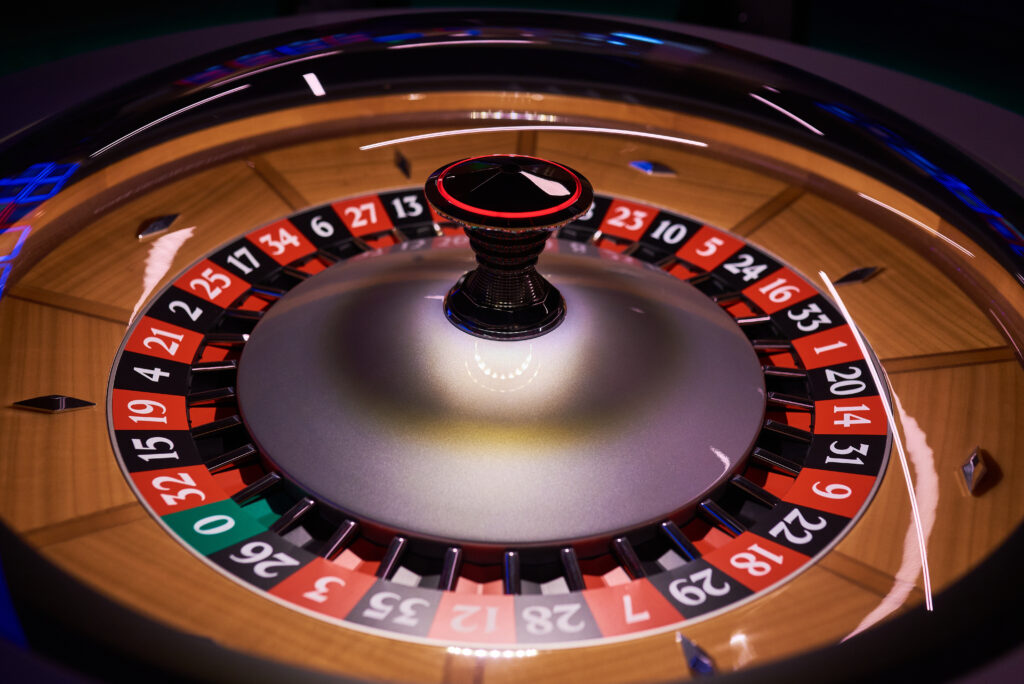
How Does Roulette Physics Affect Predictability?
Roulette might look simple, but it is driven by physics. When the croupier spins the wheel and drops the ball, factors such as speed, angle, friction, the ball’s material, and tiny imperfections can all influence the path the ball takes as it decelerates and meets the deflectors.
In theory, if every one of those variables could be measured perfectly and in real time, a short‑term prediction might be attempted. This idea has fascinated researchers for decades, but the system is highly sensitive to minute changes, and small errors quickly compound. In any case, using devices or methods to gain an unfair advantage is not permitted and may breach rules and applicable laws.
In practice, especially in regulated environments, wheels are checked, calibrated, and maintained to minimise bias. Dealers vary spin speed and direction, balls are swapped, and equipment is inspected to keep outcomes unpredictable. These controls are part of routine procedures to protect game integrity.
Online, most versions of roulette use random number generators, which replace the physical process with certified random results. RNGs are independently tested and audited so that each round is statistically independent of the last.
Live dealer games still use physical wheels, but studios enforce strict procedures and equipment checks. Previous outcomes do not influence the next spin, and no betting pattern can change the underlying probabilities.
So physics explains how the wheel operates, but it does not make outcomes predictable for ordinary play. The built‑in uncertainty and the house edge from the zero are core features of the game, not flaws, and no system can remove them.
If you choose to play, treat roulette as chance‑based entertainment, set sensible limits, and never chase losses. It should not be viewed as a way to make money.
What Does Randomness Mean For Roulette Outcomes?
Randomness is central to roulette. Each spin stands alone, and there is no way to know exactly where the ball will land in advance. Past results do not influence future outcomes, and seeing a number appear often or rarely does not make it more or less likely next time.
In land-based venues, that unpredictability comes from the physical spin, where speed and force vary from one round to the next. No two spins match perfectly, and croupier technique, wheel speed, and ball trajectory are never identical.
These environments are monitored and maintained to prevent wheel bias. Equipment is checked and calibrated, with security and regulatory oversight designed to keep the game fair and free from predictable patterns.
Online versions use random number generators to produce results. These systems are independently tested and regulated to ensure fairness, with regular audits to confirm that outcomes are unpredictable and not influenced by players or operators.
Game information such as rules and return to player (RTP) is provided to help you understand the product, but RTP is a long‑term theoretical measure and not a guarantee of individual results.
Wherever it is played, this independence between spins means no pattern or staking system can guarantee a win or overcome the house edge created by the zero. Streaks and near misses are a normal part of variance and do not signal a change in odds.
Roulette is designed as a game of chance, and that unpredictability is fundamental to how it works. Always play responsibly, set limits, and never chase losses. So where does that leave machine learning?
Can Machine Learning Predict Roulette Outcomes?
Machine learning is excellent at spotting structure in data. It powers everything from translation tools to shopping recommendations by finding relationships that humans might miss. Where there is a stable pattern, models can learn it and make useful forecasts.
Roulette does not offer that structure. Each spin is independent, and certified random number generators in online games remove any link between one result and the next. On properly maintained physical wheels, casinos monitor for bias; if issues appear, equipment is repaired or replaced. With no dependable pattern to learn, even sophisticated models have nothing meaningful to predict.
It is an appealing idea that a computer could out-think the wheel, but the design of the game prevents it. The house edge remains constant over time, and no algorithm changes the return to player. Any model will tend to overfit noise, appear “promising” on past spins, and then fail on new data.
If people try anyway, they often track “hot” and “cold” numbers, chase streaks, or use staking progressions. None of these alter the odds, and they can increase losses quickly. Using external devices or attempting to manipulate equipment is prohibited and may be unlawful.
Gambling outcomes are random, and there is no system that guarantees profit. Play for entertainment only, set limits, and never stake more than you can afford to lose. If gambling stops being fun, take a break and consider support.
Machine Learning Methods Used To Analyse Roulette
Supervised Learning, Time Series And Computer Vision
People have tried several approaches to squeeze an edge from data. The most common are supervised learning, time series analysis and computer vision, often borrowed from finance or engineering and repurposed for games of chance.
Supervised learning feeds past outcomes into a model in the hope it will find repeatable patterns. Because properly run roulette produces independent results, the model ends up training on noise, not signal.
Even with sophisticated feature engineering or cross‑validation, apparent “patterns” tend to be overfitting. When tested out of sample, predictions revert to chance, offering no reliable or sustainable advantage.
Time series analysis looks for trends in the order and timing of spins. Again, with independence between results, there is nothing meaningful to extract.
Attempts to exploit streaks, runs, or clustering quickly blur into the gambler’s fallacy. Changes in dealers, spin direction, and table procedures do not create a predictable drift and, in regulated environments, variance should not be mistaken for signal.
Computer vision aims to track a physical wheel and ball from video, estimating positions and speeds to forecast where the ball might settle. This depends on measuring a specific wheel in real time with precision, which is not possible for online roulette where outcomes are generated digitally rather than by a physical device.
Even with live‑streamed tables, camera angles, latency, betting cut‑off times and house procedures limit any measurement. The use of external devices to gain an advantage is also prohibited under most terms and conditions.
Under UK regulation, outcomes are designed to be fair and independent, and the house edge cannot be removed by data science. These methods are interesting as exercises, but they do not overcome the absence of exploitable structure in regulated roulette.
If you choose to play, treat it as entertainment, set clear limits, and never stake more than you can afford to lose. No system or model can guarantee profit.
Has Any Bot Successfully Predicted Roulette In Practice?
Stories circulate about bots that cracked roulette using clever software or hidden gadgets. A few historical cases involved spotting biased physical wheels or using timing techniques, but those were rare, short‑lived, and relied on faults that modern maintenance eliminates. Using external devices or covert tools would also breach house rules and could lead to removal or exclusion.
In today’s regulated casinos, especially online, there is no verified example of a bot consistently predicting outcomes. Modern venues rotate and service wheels, monitor for patterns, and train staff to detect advantage play. Online games use random number generators that are independently tested, with oversight procedures designed to prevent manipulation.
Claims of guaranteed prediction tend to be anecdotal or marketing hype. Roulette is a game of chance with a built‑in house edge, and no system or software can assure long‑term profit. Attempting to gain an unfair advantage may violate terms and conditions and result in account restrictions or closure.
If you choose to play, do so for entertainment, set sensible limits, and never risk more than you can afford to lose. No strategy should be viewed as a way to make money.
The myth persists, but the record does not support it. That leads naturally to the question of what data a prediction system would even need. In practice, it would require precise, real‑time measurements of wheel and ball speed, drop points, and timing, or privileged access to an online RNG’s internal state—data that is neither available nor permissible, and which operators actively protect against.
Data Needed To Train A Roulette Prediction Model
A prediction system would require enormous amounts of high‑quality data. For digital roulette, that might mean very long histories of outcomes, timestamps, and detailed timing information. In practice, secure random number generators are designed to be unpredictable, and operators safeguard telemetry, so the specific inputs a model would need are neither accessible nor informative.
For physical wheels it would also need precise measurements such as ball speed, wheel speed, release point, and even environmental factors like table level, friction, and air flow. Reliable capture typically demands high‑speed video, exact calibration, and consistent vantage points. Collecting such data on a live casino floor is impractical, generally prohibited, and subject to surveillance and house rules.
Even with thousands or millions of spins, the core problem remains. When results are independent and generated to be random, the model has no stable pattern to learn. Certified RNGs and well‑maintained wheels are intended to remove systematic bias, so apparent trends are more likely noise than signal.
More data does not change the underlying nature of the game, nor does it overcome the built‑in house edge. A model cannot lawfully or reliably predict future outcomes, and it should not be presented as a way to secure profit. Gambling outcomes are uncertain and you should never stake more than you can afford to lose.
So the data demands are heavy, and the payoff is absent, which is why practical attempts run aground. Legal, ethical, and operational constraints further limit data collection, and overfitting or hindsight bias can mislead even careful analysts. The reasons become clearer when looking at the hard limitations.
Limitations That Prevent Reliable Roulette Predictions
Roulette is designed to resist prediction. Each spin is an independent event, so past outcomes do not influence future ones, and patterns seen in short runs are coincidental rather than meaningful.
This is why betting progressions or “systems” cannot change the underlying odds. The house edge, created by the zero or double zero depending on the variant, persists regardless of stake sizing or sequence.
Online versions use certified random number generators that produce outcomes which cannot be deduced from previous results. Modern RNGs use high‑quality entropy, ensuring that sequences lack exploitable structure.
These systems are tested by approved laboratories and are subject to ongoing audits. Under UK licensing, operators must meet technical standards that require fair, unpredictable results and proper game configuration.
Physical wheels are monitored and maintained to remove mechanical bias. Casinos routinely level wheels, vary rotor speeds, change balls, and inspect frets to ensure no pocket becomes consistently favoured.
Any irregularity that could create an edge is investigated and corrected. Attempts to exploit equipment, use devices, or collude breach house rules and regulatory conditions, and may result in exclusion.
Rules and oversight ensure fair operation on the casino floor and online. Payout tables, game rules, and return‑to‑player settings are controlled and reviewed to align with regulatory requirements.
Taken together, these measures remove the stable patterns that predictive systems rely on. No betting strategy can guarantee a profit, and outcomes remain a matter of chance.
If you choose to play, view roulette as entertainment rather than a way to make money, set sensible limits, and never chase losses.
Casino Countermeasures And Legal Issues
Casinos invest heavily in monitoring to detect and deter cheating, including the use of devices, bots, or coordinated betting. Measures range from staff training and surveillance through to data-driven tools that flag unusual patterns, rapid bet placement, or collusive play across linked accounts.
Online platforms are independently audited and their random number generators tested by approved laboratories. Licensed operators are required to maintain ongoing checks for suspicious behaviour, publish clear game rules, and monitor accounts to protect integrity and comply with anti-money laundering and safer gambling obligations.
Using unauthorised technology to gain an advantage breaches most terms and conditions and can also be unlawful. Prohibited conduct may include bots, automated decision tools that place or prompt bets, data scraping, account sharing, or signalling. In serious cases this can constitute cheating under the Gambling Act 2005, and tampering with software or data may breach computer misuse laws.
Consequences can include account restriction or closure, voiding of affected bets, confiscation of funds linked to the breach, and reports to regulators or law enforcement. Operators may withhold balances during investigations and will typically retain logs as evidence. If you have a dispute, you can use the operator’s complaints process and, where eligible, an approved Alternative Dispute Resolution provider; the UK Gambling Commission does not resolve individual complaints.
These safeguards are designed to maintain a fair environment for everyone. Players should only use tools permitted by the operator, follow house rules, and gamble responsibly—outcomes are random, and no strategy or software can guarantee profit.
With that context set, the next question is whether AI can be used by players at all, and if so, only in ways that comply with the site’s terms and UK law. Any use must not automate play or provide an unfair advantage, and profitability cannot be assumed.
Can Players Use AI Profitably At Roulette?
The appeal of using AI to gain an edge is easy to understand, especially when computers outperform humans in many fields. Curiosity about whether technology can improve results is natural, but claims should be treated with caution and assessed critically.
Roulette is different. Results are independent, and there is no reliable structure for algorithms to exploit. Each spin is separate, whether on a physical wheel or an RNG-based game, and past outcomes do not influence future ones. Apparent patterns and streaks are normal variance rather than signals that can be modelled for profit.
Tools that claim otherwise rely on coincidence or misinterpretation rather than repeatable prediction. Systems that suggest you can “beat” the wheel or the RNG ignore the house edge and the fact that no staking progression overcomes negative expected value.
Casinos also use advanced detection to block bots and other prohibited tools, and rules are enforced. Terms of play generally prohibit automated decision-making or data-scraping, and attempts to bypass them can lead to account suspension or closure in line with the operator’s terms and applicable regulations. Using third-party software may also affect the validity of bets or winnings.
In short, AI cannot turn roulette into a dependable source of profit. It should be viewed as entertainment, not an income strategy. Only stake what you can afford to lose, set sensible limits, and avoid chasing losses. Gambling is for adults aged 18+ in Great Britain; if play stops being fun, consider taking a break or seeking support.
So if AI cannot predict outcomes, where will it make a difference? At best, it may help you understand game rules, compare table limits, or track your own spending and time. These uses can improve your experience and control, but they do not change the odds or guarantee better results.
What Is The Future Of AI And Physical Casino Games?
AI is already shaping how casinos operate. It supports integrity monitoring, helps identify unusual patterns of play and behaviour, and strengthens fair play controls behind the scenes.
On the operational side, AI can assist with table allocation, queue management and chip or cash handling oversight. It can also flag potential fraud or money laundering risks, helping teams respond quickly and in line with regulatory requirements.
For players, it may enable smoother experiences, from clearer interfaces and accessible information to more relevant, permission-based communications. Any personalisation should be transparent, respect privacy, and never encourage excessive play.
Crucially, AI will not unlock predictions or strategies that beat games of chance. Outcomes in regulated casino games are random or strictly governed, and the house edge remains unchanged.
Looking ahead, AI is likely to focus on safer environments and better tools for managing play. This can include improved reality checks, session reminders, and optional limits that players set for themselves.
Analytics can help spot early signs of harm and prompt timely, proportionate interventions, such as offering safer gambling information or suggesting a break. These measures are designed to support control and informed choice.
AI may also enhance staff training, audit trails and compliance reporting, making it easier to evidence fair, consistent processes. Transparency about how AI is used, and clear routes for human review, will remain important.
So the future of AI in casinos is practical and protective rather than predictive. It can improve efficiency, oversight and player safeguards, but it will not change the fundamental unpredictability of roulette or any other game of chance.
**The information provided in this blog is intended for educational purposes and should not be construed as betting advice or a guarantee of success. Always gamble responsibly.