

Blackjack Hand Rankings: Best & Worst Blackjack Hands Explained
When you sit at a blackjack table, every card matters. Some hands instantly bring excitement, while others feel uphill from the first deal.
Understanding blackjack hand rankings is not just for seasoned players. Knowing what your cards mean for your chances makes every round clearer and more engaging.
Ready to see which hands shine and which ones tend to struggle? Here are the best and worst blackjack hands, explained in plain English.
How Are Blackjack Hands Ranked?
Blackjack hands are ranked by their total value, with the aim of getting as close to 21 as possible without going over. You are playing against the dealer, and outcomes depend on chance as well as your decisions; there are no guaranteed wins.
An Ace is special because it can count as 1 or 11, whichever helps your hand. When an Ace can be counted as 11 without the total exceeding 21, the hand is called “soft”; if counting the Ace as 11 would bust, it is treated as 1 and the hand is “hard”.
Face cards — Jack, Queen and King — are all worth 10 points. All other cards keep their number value. These values apply consistently, but table rules can vary by venue, so always check the rules in use before you play.
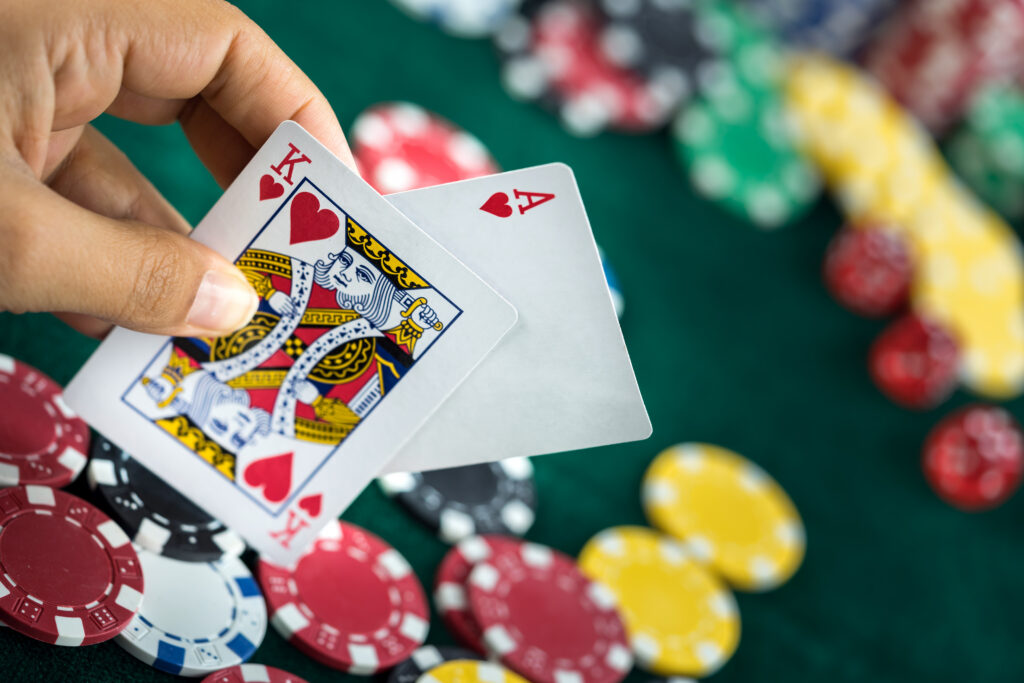
The strongest hand is a natural blackjack: an Ace with any 10-point card dealt as your first two cards. A natural usually pays more than a standard win (commonly 3:2, though some tables pay 6:5), and it beats any 21 made with three or more cards. If both you and the dealer have a natural blackjack, the result is typically a push (a tie).
Other hands are ranked by their totals. If your cards add up to a higher number than the dealer’s, without going over 21, you win. If both totals are the same, it is usually a push and your stake is returned. Go over 21 and you bust, which means you automatically lose that round.
Dealer drawing rules (for example, whether the dealer hits or stands on a soft 17) do not change hand values but can affect outcomes. So, the closer your cards are to 21, the stronger your hand tends to be — provided you do not bust. Sound judgement about when to stand or take another card matters just as much as the total itself.
Remember: house rules and payouts vary. Only stake what you can afford to lose and consider setting limits before you start.
What Is A Natural Blackjack And Why Is It Best?
A natural blackjack is when your first two cards are an Ace and any 10‑point card (10, Jack, Queen, or King). It only counts as a natural if it is achieved with the initial two cards; reaching 21 with more cards is not the same.
This hand is especially strong because it usually wins immediately without any further action, unless the dealer also has a natural blackjack. If you and the dealer both have one, the result is a draw, known as a push, and your original stake is returned. Depending on the variant, the dealer may check (or “peek”) for blackjack before you act, or the hand may be settled after players have made their decisions.
A natural blackjack typically pays more than a standard winning hand, commonly at 3:2. For example, a £10 stake would usually return £15 in winnings, plus the original £10 stake. However, payouts can vary by table and house rules, with some games paying 6:5 or even 1:1, and 21 made after splitting Aces may not receive the higher payout. Always check the pay table and rules at your table.
It is considered the best possible starting hand because it cannot be beaten, only matched by the dealer. That said, all outcomes depend on chance, and no result is guaranteed. Only gamble with money you can afford to lose, and use safer gambling tools and limits where available.
What Are Other Strong Hands Worth 21?
While a natural blackjack (a two‑card 21) is the best possible hand, you can still reach a total of 21 using three or more cards. These hands are common and can be competitively strong, but they are treated differently to a natural blackjack for payout purposes.
Any combination of cards that totals 21 is valid. For example, you might have 7, 6, and 8, or three 5s and a 6. An Ace can count as 1 or 11, so hands like A, 5, 5 can also make 21 by valuing the Ace at 11. These are still 21s; they are simply not natural blackjacks.
A 21 made with more than two cards does not usually receive the enhanced “blackjack” payout. In most games, if your multi‑card 21 beats the dealer, it is paid at the standard 1:1. If the dealer also finishes on 21, the result is typically a push (a tie) and your stake is returned. House rules vary, so always check the table rules before you play.
It is also important to note that a dealer blackjack (a two‑card 21) generally beats a player’s 21 made with more than two cards, while a player blackjack will usually be paid at the enhanced rate subject to the table’s payout (for example 3:2 or 6:5). Once you hold three or more cards, options like splitting are no longer available, and your Ace will automatically adjust from 11 to 1 as needed to avoid going bust.
Reaching 21 in any way is a strong outcome, but it does not guarantee a win. Results depend on the dealer’s final hand and the specific house rules in force. Consider the risks involved, set limits, and only stake what you can afford to lose.
How Do Soft Hands Work?
A soft hand is any hand that includes an Ace counted as 11. For example, Ace-6 is a soft 17. If more than one Ace is present, only one can be treated as 11 at any given time; additional Aces are counted as 1 to keep the total valid.
Soft hands are useful because the Ace gives you flexibility. If you draw another card and your total would go over 21, the Ace can shift from 11 to 1, helping you avoid a bust.
Take Ace-6 as an example: if a 9 arrives, the hand moves from soft 17 to hard 16, rather than busting. If a 5 arrives, the Ace adjusts and you have 12, which keeps the hand in play. Conversely, if a 2 or 3 appears, you improve neatly to 19 or 20 while still avoiding risk.
Because of this flexibility, soft hands can develop into stronger totals as the round continues, especially when a single medium card can turn them into 18, 19 or 20. That said, no decision guarantees a win. Outcomes depend on the specific table rules, such as the number of decks, whether the dealer hits or stands on soft 17, and whether doubling after a split is allowed.
Many players consult basic strategy charts to decide when to hit, stand, or double with a soft hand, but you should always consider the house rules and your own risk tolerance. Never stake more than you can afford to lose, and remember that blackjack involves chance as well as decision-making.
Which brings us to the tighter alternative.
How Do Hard Hands Rank Compared To Soft Hands?
Hard hands do not have an Ace counted as 11, so they lack the safety net that soft hands provide. This means the hand either contains no Ace at all, or any Ace present can only be counted as 1 without busting. Once a hand is hard, it stays hard unless a new Ace can be counted as 11 without exceeding 21.
Because there is no buffer, if your total creeps too high, any additional card can push you over 21. Hands like hard 12–16 are particularly fragile, as many draws will bust, and hard 17 or higher offers very little room to improve without ending the round.
By contrast, a high soft hand is generally preferred at the same total because it offers more safe outcomes if you choose to take another card. With the Ace counting as 11, you can often take at least one extra card and, if needed, the Ace can revert to 1 to keep you in the round.
For example, hard 17 leaves minimal scope to improve, whereas soft 17 can absorb a higher card and still remain live. Similarly, soft 18 can take a hit in situations where hard 18 would usually risk an immediate bust.
If you are unsure which type to favour, a strong soft hand is usually more flexible than the same total as a hard hand because it gives you more ways to continue without exceeding 21. However, the best decision can depend on the specific table rules (such as whether the dealer hits soft 17) and the dealer’s upcard. No choice guarantees a win, and outcomes are always subject to chance, so consider the rules in play and stake responsibly.
Which Hands Are The Worst In Blackjack?
Some starting totals make life tricky from the outset. The hardest are usually the so‑called “stiff” hands, hard 12 through hard 16, because they sit in an uncomfortable middle ground. If you stand, you often trail a routine dealer total; if you hit, you carry a meaningful risk of going over 21.
A hand like 10 and 6 is awkward because it is often too weak to stand confidently, yet risky to hit since many cards could push it over 21. With hard 16, any draw of 6 through 10 will bust, while only a narrow set of cards genuinely improves the total, which makes decision‑making feel high‑pressure even though outcomes remain uncertain.
Hands without an Ace for flexibility are tougher still when the dealer shows a strong upcard like a 10 or an Ace. Without the soft cushioning an Ace can provide, you have less room to absorb a hit, and standing can still leave you behind if the dealer makes 20 or 21. These spots feel uncomfortable precisely because both options carry clear drawbacks.
In those moments, the pressure shifts to cautious decision‑making, since a single misstep can end the round. This is where table rules matter: whether the dealer hits soft 17, if surrender is offered, how many decks are in use, and how splits are handled can all influence the least bad choice. Where available, late surrender can reduce losses on particularly poor starts such as hard 16 versus a dealer 10.
No approach removes the house edge, and even sound, basic strategy choices do not guarantee a result on any given hand. If you choose to play, consider the rules in advance, set limits, and only stake what you can afford to lose.
How Do Dealer Rules And Payouts Affect Hand Value?
The rules the dealer follows can change how valuable your total really is, because they alter how often certain outcomes occur. If the dealer must stand on all 17s, your stronger hands have a better chance of holding up without needing extra risk. By contrast, if the dealer can hit on a soft 17 (a total of 17 that includes an Ace counted as 11), more rounds will see the dealer improve to 18, 19 or 20 and slightly fewer dealer busts, which can reduce the relative strength of player totals like 17 or 18.
These rule differences do not change the cards you are dealt, but they do influence the long‑term expectation of how often particular hands will win, push, or lose. As such, two tables that look similar can play quite differently once these small details are applied.
Payouts also matter. A natural blackjack commonly pays 3:2, meaning a £10 stake returns £15 in winnings plus your £10 stake back. Some tables offer 6:5 instead, which pays £12 on a £10 blackjack. That lower rate does not change how often you receive a blackjack, but it does reduce the payout for that result and therefore the game’s long‑term return to the player.
It is always worth checking the table rules and payouts before you play. Look for whether the dealer hits or stands on soft 17, the number of decks, whether doubling or splitting has restrictions, and whether surrender is offered. Small differences in standing or hitting rules, and the blackjack payout, can shift how strong certain totals are in practice.
Remember: outcomes are determined by chance on each hand, and no rule set removes the house edge. Play within your budget, avoid chasing losses, and treat the game as entertainment rather than a way to make money.
Common Misconceptions About Blackjack Hand Rankings
Many players think any total close to 21 is almost certain to win. In reality, the dealer’s upcard and the rules of the table can change the outcome, even when your number looks strong.
Even a solid total like 20 can still lose to a dealer 21, and a tie (a push) does not result in a win. Factors such as the number of decks, whether the dealer hits or stands on soft 17, and whether surrender or double-after-split is allowed can all influence results.
Another myth is that two face cards, such as King and Queen, are just as good as a natural blackjack. Only an Ace with a 10-point card as your first two cards is a true blackjack, and only that two-card hand is treated as a natural.
Natural blackjacks typically receive a premium payout (often 3:2), but some tables pay 6:5 or less, which reduces returns. Always check the table rules displayed on the felt before you play.
Some also assume all 21s are equal. They are not. A 21 made with three or more cards does not pay like a natural blackjack and usually wins only at even money if it beats the dealer.
After splitting Aces, many games count an Ace plus a 10-value card as 21 rather than a natural blackjack, so it will not receive the enhanced payout. Rules vary by venue, so confirm before acting.
It is easy to overestimate what a single total means in isolation. Understanding soft versus hard totals, how different hand types are ranked, and how the house rules apply will help you judge situations more clearly.
Remember that outcomes are never guaranteed, side bets and insurance are separate wagers with their own house edge, and no approach removes risk. Set limits, play within your means, and only gamble if it remains enjoyable.
Quick Reference: Hand Ranking List From Best To Worst
Here is a quick guide to how blackjack hands compare, from the strongest to the most fragile. It is a general overview to help you read a round quickly.
Outcomes depend on the dealer’s upcard and the table rules in play, so treat this as guidance rather than a promise of results.
1. Natural Blackjack
Ace plus any 10-point card, such as 10, Jack, Queen or King. This typically beats any other 21 and pushes if the dealer also has blackjack.
Pay-outs for a natural vary by table (for example, 3:2 or 6:5), so check the rules before you start.
2. 21 Made With Three Or More Cards
Any combination totalling 21 that is not a natural blackjack. It usually pays even money and still loses to a dealer blackjack.
This hand remains strong, but how you reach 21 can affect pay-outs and the overall value of the hand.
3. Strong Soft Hands
Hands with an Ace counted as 11 and a high card, such as Ace-9 for soft 20. Soft hands are flexible, as the Ace can drop to 1 to avoid busting.
Basic strategy often recommends standing on soft 20, but actions can vary with the dealer’s upcard and house rules.
4. Strong Hard Hands
High totals without an Ace counted as 11, like a pair of 10s for hard 20. These are powerful but less flexible, as any hit risks a bust.
In most situations you should stand on these totals, though the correct play can still depend on the dealer’s card.
5. Medium Hands (17–19)
Mid-to-high totals that can hold up well, whether soft or hard, depending on the dealer’s position. A soft 18 (Ace-7), for example, may call for different decisions than a hard 18.
These hands are competitive, but the optimal move is often shaped by the dealer’s upcard and table options.
6. Weak Hands (12–16 Hard Totals)
Totals that face a higher risk of busting if you take another card. They are vulnerable against strong dealer upcards.
Hitting, standing, or surrendering (where available) should be guided by basic strategy and the specific rules in use.
7. Anything Under 12
Unlikely to bust on a single hit, but usually needs to improve to compete. These hands often require additional cards to reach a competitive total.
Decision-making here is largely dictated by the dealer’s upcard and whether doubling is permitted.
Keep this list in mind to read each round at a glance and weigh up your options. It is not a guarantee of success, and the house edge still applies.
Only play if you are comfortable, set limits, and stop if it is no longer enjoyable. Never gamble with money you cannot afford to lose.
**The information provided in this blog is intended for educational purposes and should not be construed as betting advice or a guarantee of success. Always gamble responsibly.